


UPS Expands AI Strategy Across Pricing, Customs and Network Operations
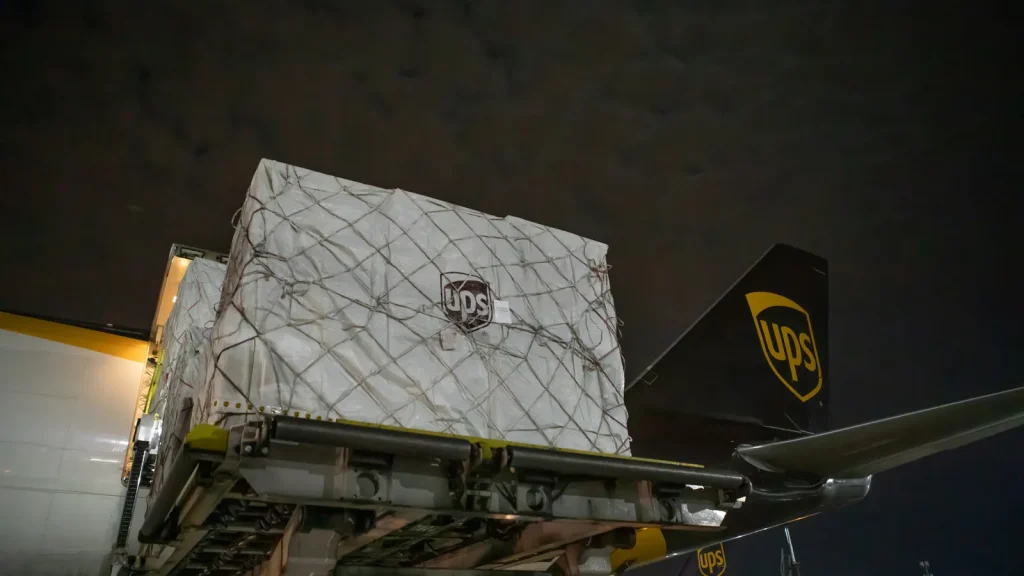
Artificial intelligence is no longer a support tool at UPS — it is becoming a central layer of how the company operates, adapts and makes decisions across its global network.
From pricing strategies to customs clearance and operational planning, the carrier has spent years building data and AI capabilities designed to anticipate disruption, improve service reliability and accelerate decision-making. According to Mallory Freeman, president of global enterprise data analytics and generative AI at UPS, the company’s approach is rooted in one key principle: better data leads to better decisions.
As data becomes cleaner, more structured and more accessible, AI systems are increasingly able to support faster and more accurate operational choices. This is particularly critical in logistics, where disruptions linked to weather, peak volumes or regulatory changes can quickly impact service performance.
One of the technologies supporting this shift is digital twin simulation. Before implementing routing or network adjustments, UPS can model different scenarios and assess their impact on parcel flows in a virtual environment. This allows the company to test decisions in advance and adapt quickly as conditions evolve.
AI reshaping customs and global trade flows
UPS has also significantly expanded the use of AI in managing cross-border logistics, particularly in response to changing trade regulations.
Machine learning models are now used to ensure shipments comply with Harmonized System classification codes, tariff requirements and evolving customs policies. These capabilities became especially important following the removal of the U.S. de minimis exemption in August, which introduced more complex customs procedures for low-value shipments.
The results have been substantial. In March 2025, around 21% of 13,000 daily U.S.-bound packages were cleared without manual intervention. By September of the same year, that figure had reached 90% of 112,000 daily shipments.
UPS attributes this leap to the integration of advanced AI systems, including agentic AI, into its customs brokerage processes. These tools have allowed the company to handle higher volumes and greater regulatory complexity without compromising delivery performance.
This capability is becoming increasingly strategic as UPS navigates broader market shifts, including global trade volatility and changes in its U.S. network linked to reduced volumes from Amazon.
Pricing powered by real-time intelligence
Beyond operations, AI is also transforming how UPS approaches pricing — an area the company describes as both analytical and highly strategic.
Sales teams now rely on tools such as Deal Manager, which provides real-time pricing guidance during negotiations. Instead of relying solely on experience or historical benchmarks, pricing decisions are now dynamically supported by generative AI models.
According to CEO Carol Tomé, this shift has delivered measurable results. Deals are now scored in real time, allowing sales teams to adjust their strategy instantly. The outcome has been a higher win rate combined with lower discounting levels — a clear improvement in commercial performance.
Workforce transformation at the core of the strategy
While technology is a major focus, UPS is equally investing in its people to ensure the successful deployment of AI across the organisation.
The company is rolling out global training programmes aimed at helping employees better understand and use data analytics and artificial intelligence in their day-to-day roles. The objective is not only to automate processes, but to enable employees to work alongside these technologies more effectively.
This approach is particularly important as UPS continues to increase automation across its network. The company is actively developing more advanced sorting facilities, where robotics will handle tasks such as sorting, bagging and label application.
For UPS leadership, this evolution is not about replacing human roles, but about redefining them. As automation expands, new responsibilities will emerge, particularly in overseeing systems, managing data and ensuring operational continuity.
A broader industry shift
UPS is not alone in this transition. Competitor FedEx has also launched large-scale AI training initiatives, including programmes aimed at improving AI literacy across its workforce and advanced training for technical teams.
However, industry experts warn that many companies are still focusing too heavily on technology itself, without investing enough in change management and employee development. According to Alan Amling, a former UPS executive and now academic, this imbalance could limit the long-term impact of AI adoption.
The companies that succeed, he suggests, will be those that invest equally in systems and in the people responsible for using them.
A structural shift, not a short-term trend
For UPS, the integration of AI is no longer experimental — it is becoming foundational.
As supply chains grow more complex and global trade becomes more volatile, the ability to process data, simulate decisions and automate key processes is turning into a competitive necessity. At the same time, the human element remains central, with workforce adaptation playing a decisive role in how effectively these technologies are deployed.
In that sense, UPS’ strategy reflects a broader transformation across the logistics sector: one where performance is increasingly defined by the combination of data, technology and human expertise.
The post UPS Expands AI Strategy Across Pricing, Customs and Network Operations appeared first on The Logistic News.
Share this post

Related
Posts

UAE-Based Kays Worldwide Logistics Positions Itself at the Crossroads of Global Trade
As global trade continues to shift under the pressure of geopolitical uncertainty, supply chain disruption and evolving transport corridors, logistics...
UPS Expands AI Strategy Across Pricing, Customs and Network Operations
Artificial intelligence is no longer a support tool at UPS — it is becoming a central layer of how the...

UPS Caps Driver Buyouts at 7,500 Under New Teamsters Agreement
UPS has agreed with the Teamsters union to limit its latest driver buyout programme to a maximum of 7,500 drivers,...

Cyberattack Disrupts Hasbro’s Order and Shipping Operations
Hasbro is working through the fallout of a cyberattack that has disrupted parts of its manufacturing and shipping operations and...