


The United States seizes a 7th tanker: pressure mounts on sanctioned ships

New episode in the maritime tug-of-war over sanctions: the United States has seized a seventh tanker suspected of operating in violation of restrictions related to Venezuelan oil. The vessel in question, an Aframax named Sagitta, was reportedly apprehended in the Caribbean during an operation led by American forces in support of domestic security authorities.
The political message is clear: Washington wants to demonstrate that the “quarantine” of the sanctioned ships is not symbolic. The authorities have communicated about an action carried out “without incident,” while hammering home the idea that oil exports must be done “legally” and in a “coordinated” manner. Beyond the rhetoric, it is the operational signal that counts: the risk of interception becomes a concrete parameter in the management of routes, flags, and ownership structures.
The case of the Sagitta also illustrates a trend closely monitored by analysts: periods of “shadow” navigation, when ships turn off their AIS (or present incomplete data), fuel suspicions and complicate traceability. The available information indicates uncertainties about certain registration and beneficial ownership elements, which is precisely the type of gray area that sanctions mechanisms seek to reduce.
For the markets, the issue goes beyond a single ship: intensifying the enforcement of sanctions can reduce the “available” fleet on certain routes, increase risk premiums, and strengthen the segmentation between “compliant” operators and high-risk circuits.
The post The United States seizes a 7th tanker: pressure mounts on sanctioned ships appeared first on The Logistic News.
Share this post

Related
Posts

Trump threatens “Death, Fire and Fury” if Iran closes the Strait of Hormuz
Tensions surrounding the Strait of Hormuz intensified after US President Donald Trump issued a series of stark warnings to Iran,...
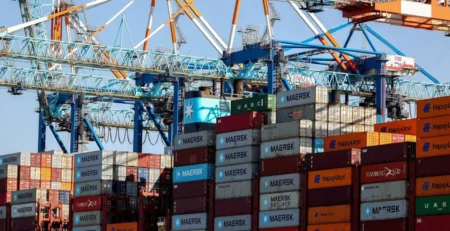
Container lines offer convoluted connections from Asia to the Middle East
As security risks intensify across key maritime corridors in the Middle East, container carriers are increasingly relying on complex multimodal...

Dutch forwarder Share Logistics builds global momentum from Amsterdam hub
At a time when global supply chains continue to face disruption, forwarders that combine flexibility with specialized expertise are becoming...
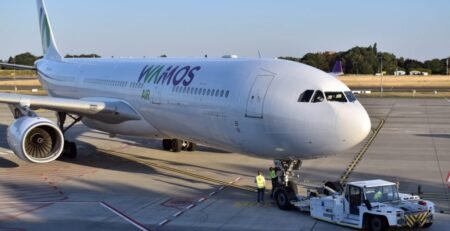
Wamos Air renews long-term ULD partnership with Jettainer
Wamos Air has renewed its long-term partnership with ULD management specialist Jettainer, extending a relationship that began in 2018. The Madrid-based...