


the American “Maritime Action Plan” and what it really changes for shipping lines

Washington has just unveiled an ambitious maritime plan that aims to achieve two objectives: revitalize American shipbuilding and reduce dependence on foreign ships. On paper, it’s an industrial program. In fact, it is also a message sent to the entire global supply chain — and especially to the international shipowners who dock at US ports.
Among the most closely monitored measures: the idea of a “universal” fee applied to ships built outside the United States, calculated based on the weight of imports. No tariff has been set at this stage, but the document mentions numerical examples that give an idea of the potential scale. Even at a low level, the impact could quickly turn into a structural overload on the main lines, with a mechanical effect on the prices paid by shippers.
Another sensitive point: a tightening of cargo preference rules in favor of the US flag, and a proposed tax on entry by land (Canada/Mexico) to prevent circumvention strategies. The plan also mentions a future “strategic commercial fleet” supported by public mechanisms, which would amount to establishing subsidized competition in certain segments.
The most important thing: nothing is “in effect” yet. But the shipping lines and BCOs now have a roadmap to closely monitor, as it can permanently alter costs, routings, and access to the U.S. market.
The post the American “Maritime Action Plan” and what it really changes for shipping lines appeared first on The Logistic News.
Share this post

Related
Posts

The rumors of a multi-billion deal in Abu Dhabi are intensifying.
Speculations are escalating: a multi-billion logistics deal in Abu Dhabi is reportedly under increasingly intense discussion, to the point of...

“SaaS as we know it is dead” — AI wants to sell results, not tools
A shocking phrase is circulating in the corridors of supply chain events: “the SaaS as we know it is dead.”...
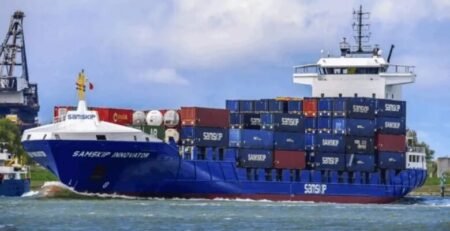
CLdN ready to take over Samskip’s UK & Ireland services
In the European shortsea sector, an operation is taking shape that could redefine several flows: CLdN is preparing to take...
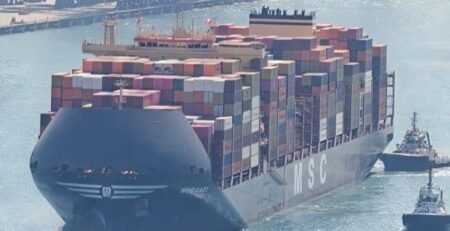
“Blank sailings” explode: shipowners anticipate a post-Chinese New Year slump
The major East-West shipping lines are preparing to absorb a new wave of capacity adjustments. On the transpacific, transatlantic, and...