


Global freight and tariff pressures challenge logistics networks.
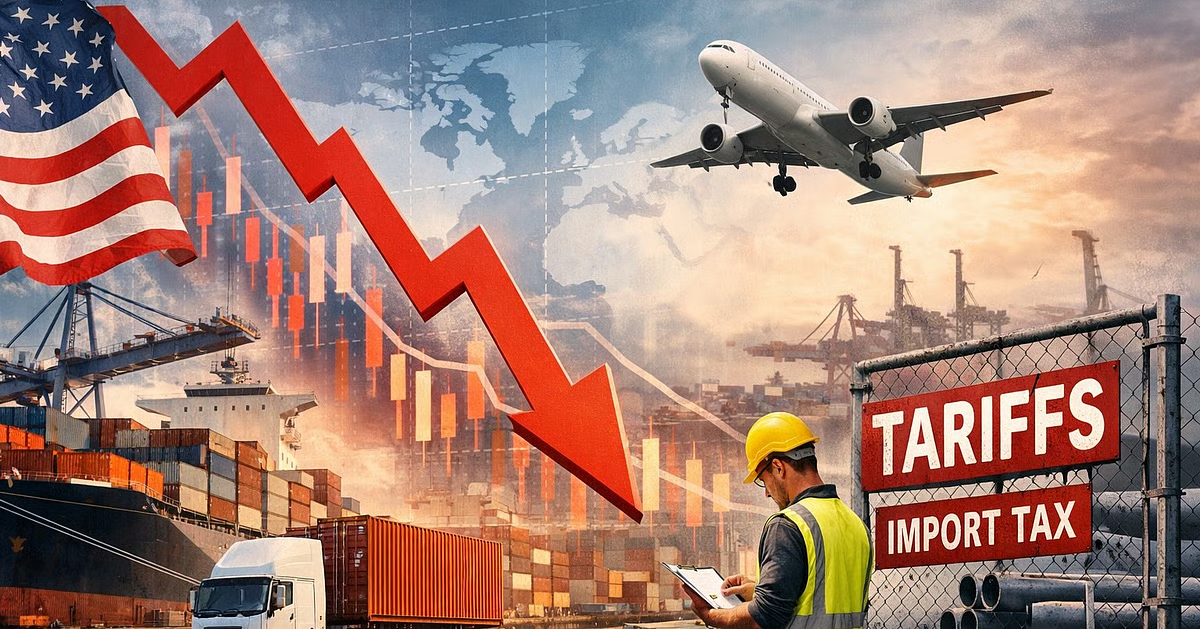
In a context of persistently tight logistics markets, international freight players are facing a confluence of tariff pressures, network restructurings, and operational disruptions. On one hand, companies like UPS are reorganizing their operations in response to a decline in traditional parcel volumes, particularly related to their former contract with Amazon. On the other hand, tariff policies and trade negotiations continue to influence routing choices and priority destinations for air and sea freight.
For example, customs tariff adjustments in Eurasia and potential free trade agreements are changing trade dynamics, while carriers and maritime operators are dealing with challenges of service punctuality and unconventional transit practices such as “dark fleet” transfers. These combined dynamics highlight a trend where predictability becomes a key criterion for shippers, who demand greater tariff clarity, reliable services, and adaptive operational plans in an uncertain global environment.
The post Global freight and tariff pressures challenge logistics networks. appeared first on The Logistic News.
Share this post

Related
Posts
Maersk forced to reposition fuel supplies as Middle East bunkering collapses
The disruption to oil exports through the Strait of Hormuz is forcing Maersk to take the unusual step of transporting...

Multipurpose vessel sector stable for now despite Middle East conflict
The ongoing conflict in the Middle East has so far had only limited direct impact on the multipurpose vessel (MPV)...

US trucking rates rise as diesel prices surge amid Middle East tensions
The US trucking market is showing early signs of emerging from a freight downturn that has lasted nearly four years....

FMC monitoring carrier surcharges linked to Middle East conflict
The US Federal Maritime Commission (FMC) has announced it is closely monitoring new surcharges introduced by ocean carriers as the...