


Container lines offer convoluted connections from Asia to the Middle East
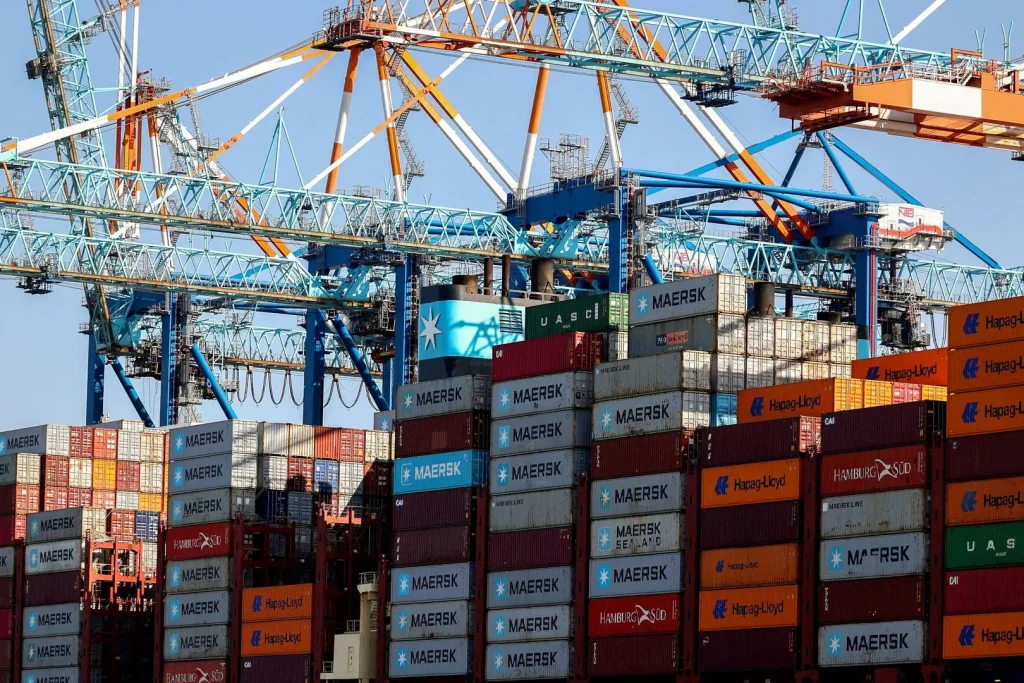
As security risks intensify across key maritime corridors in the Middle East, container carriers are increasingly relying on complex multimodal routes to maintain cargo flows between Asia and the Gulf region.
The escalation of tensions linked to the conflict with Iran has pushed several major shipping lines to suspend services through the Strait of Hormuz and limit operations toward Red Sea ports. At the same time, ongoing attacks on commercial vessels near the Bab-el-Mandeb Strait have made direct routes between Asia and the Red Sea increasingly difficult.
To keep supply chains functioning, carriers are now introducing alternative logistics solutions that combine long maritime detours with inland transport legs.
One example comes from CMA CGM, which is promoting its Phoenician Service (PHOEX) linking ports in South Korea, China, Singapore and Malaysia with the eastern Mediterranean port of Mersin in Turkey. From there, cargo can be moved inland through Turkey toward Iraq via overland connections, including the use of a CMA CGM depot located near Baghdad and further distribution toward the Upper Gulf region.
The maritime leg of this service now sails around the Cape of Good Hope, one of the longest possible diversions from the Red Sea route, adding roughly two weeks to the overall transit time.
Meanwhile, MSC, the world’s largest container shipping line, has introduced another workaround by routing cargo from Asia to the Mediterranean using services that also bypass the Red Sea via the Cape of Good Hope.
Cargo arriving in the Mediterranean is then connected to Saudi Arabian Red Sea ports, including King Abdullah Port and Jeddah, through southbound transits via the Suez Canal. From these gateways, inland transport solutions connect freight to major Gulf destinations such as Dammam, Riyadh, Jubail, Bahrain, Kuwait, Hamad, Jebel Ali and Abu Dhabi.
To feed these connections, MSC is using its Dragon and Jade round-the-world services, which call at ports in Italy, Spain and Portugal before linking cargo flows back toward the Middle East.
The increasingly complex routings highlight the extent to which geopolitical instability in the region is forcing shipping companies to redesign traditional maritime trade corridors.
The post Container lines offer convoluted connections from Asia to the Middle East appeared first on The Logistic News.
Share this post

Related
Posts

Trump threatens “Death, Fire and Fury” if Iran closes the Strait of Hormuz
Tensions surrounding the Strait of Hormuz intensified after US President Donald Trump issued a series of stark warnings to Iran,...
Container lines offer convoluted connections from Asia to the Middle East
As security risks intensify across key maritime corridors in the Middle East, container carriers are increasingly relying on complex multimodal...

Dutch forwarder Share Logistics builds global momentum from Amsterdam hub
At a time when global supply chains continue to face disruption, forwarders that combine flexibility with specialized expertise are becoming...
Wamos Air renews long-term ULD partnership with Jettainer
Wamos Air has renewed its long-term partnership with ULD management specialist Jettainer, extending a relationship that began in 2018. The Madrid-based...