


Container shipping lines react to Middle East crisis
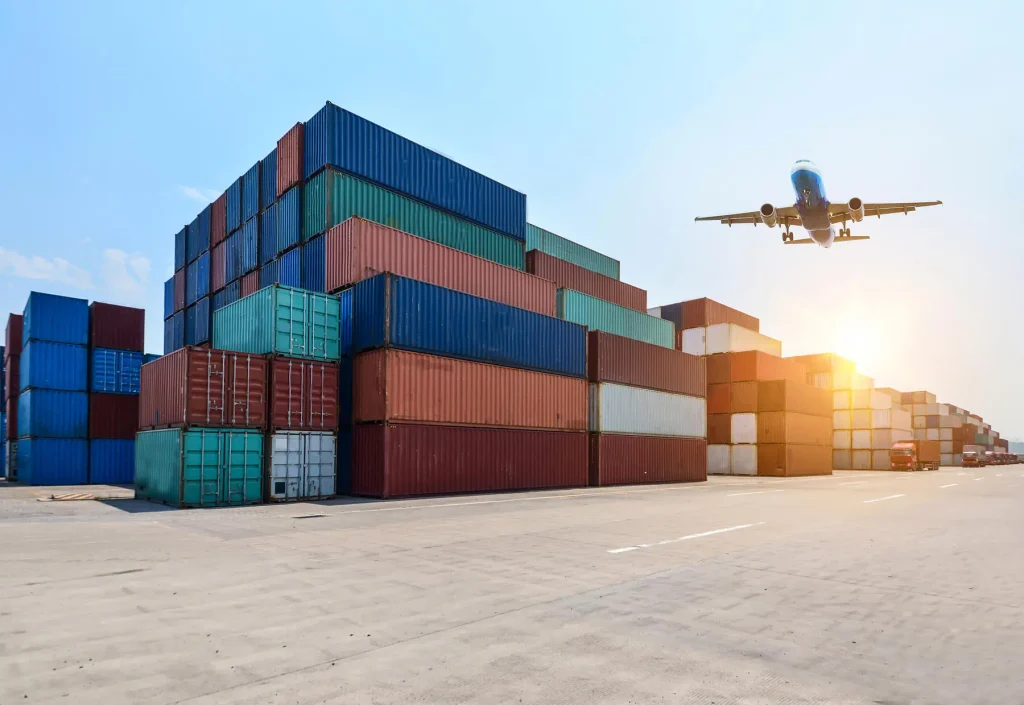
As the conflict in the Middle East continues to disrupt global logistics, container shipping lines are now taking increasingly decisive action, adding further pressure to already fragile supply chains.
While airlines, handlers and air cargo operators have already been responding to the situation, ocean carriers are now making moves that could have significant consequences for freight moving into and out of the region over the coming days, weeks and potentially months. If cargo can no longer move efficiently by sea, some of it may inevitably shift to air.
Taiwanese carrier Evergreen is among the latest lines to tighten restrictions. In a March 5 announcement, the company said it was temporarily suspending acceptance of new bookings for a number of Middle Eastern ports. The measure applies to both port of loading and port of discharge, and covers Bahrain, Kuwait, Qatar, the United Arab Emirates, Saudi Arabia excluding Jeddah, and Umm Qasr in Iraq. Evergreen said the decision was taken to protect crew, vessels and customers’ cargo and would remain in force until further notice.
Mediterranean Shipping Company (MSC) has also introduced major emergency measures. The carrier declared an “End of Voyage” for all cargo under its custody that is destined for ports in the Arabian Gulf, including containers already ashore or still at sea. MSC said shipments already en route would be diverted to the nearest safe port, where the cargo would be discharged and made available for local delivery or recovery. At the same time, the company said it would offer alternative inland logistics solutions for Iraq-bound cargo through its Asia–Türkiye services.
German carrier Hapag-Lloyd has also moved quickly. On March 6, the company said that following the suspension of all shipments to and from the region, it would begin implementing contingency procedures for cargo already in transit to and from the United Arab Emirates, Saudi Arabia excluding Jeddah, Kuwait, Qatar, Bahrain, Iraq, Oman and Yemen. Just days earlier, on March 3, Hapag-Lloyd had already announced that because of the Middle East conflict and the official closure of the Strait of Hormuz by the relevant authorities, it was suspending all vessel transits through the waterway until further notice.
That closure is likely to reach far beyond shipping. The Strait of Hormuz is one of the most strategically important maritime chokepoints in the world, carrying not only vast volumes of cargo but also a major share of global oil flows. Its disruption is expected to hit the airfreight sector as well, particularly through rising jet fuel costs.
That pressure is already visible in the energy markets. On March 9, benchmark oil prices moved above $100 per barrel for the first time since 2022, as the war entered its tenth day.
Ocean Network Express (ONE) also issued a statement on March 9, saying that the exceptional operational and security conditions in the Middle East, including the effective closure of the Strait of Hormuz, had forced it to implement contingency measures across affected routes. These include alternative routings and operational adjustments. ONE had already suspended acceptance of new bookings for cargo moving to and from the Persian Gulf on March 2.
Maersk has taken similar steps. The Danish shipping group has temporarily suspended the acceptance of cargo bookings into and out of the UAE, Oman excluding Salalah, Iraq, Kuwait, Qatar, Bahrain and Saudi Arabia, limited to Dammam and Jubail, until further notice.
The company also highlighted the implications for airfreight. Maersk noted that several countries, including the UAE, Qatar, Bahrain, Kuwait, Iraq and Iran, had temporarily closed their airspace. It added that many airlines had either cancelled flights or rerouted services through the region, reducing available options and causing last-minute schedule changes that could lead to delays and longer transit times.
Maersk further warned that disruptions at seaports and in ocean operations could also extend lead times, especially for Sea-Air cargo moving through affected hubs. It added that cargo handovers, acceptance and processing at airports and terminals may also be impacted where local restrictions are in place or staff shortages emerge.
The post Container shipping lines react to Middle East crisis appeared first on The Logistic News.
Share this post

Related
Posts
Wamos Air renews long-term ULD partnership with Jettainer
Wamos Air has renewed its long-term partnership with ULD management specialist Jettainer, extending a relationship that began in 2018. The Madrid-based...
Kenya Airways transports first rally cars for 2026 Safari Rally
Kenya Airways has safely flown the first consignment of two high-performance rally cars into Jomo Kenyatta International Airport as preparations...

States sue Trump over 10% global tariff
A coalition of more than 20 U.S. states has filed suit to block the new 10% global tariff imposed by...

CBP says tariff refund process is not ready yet
U.S. Customs and Border Protection has told a federal court that it is not yet able to begin processing refunds...