


U.S. Ports Seek Independence as Lawmakers Push for American-Made Cranes
By Maria Kalamatas | July 4, 2025 – Washington, D.C.
In Washington this morning, a small group of lawmakers introduced a bill that’s quietly stirring debate in the logistics world.
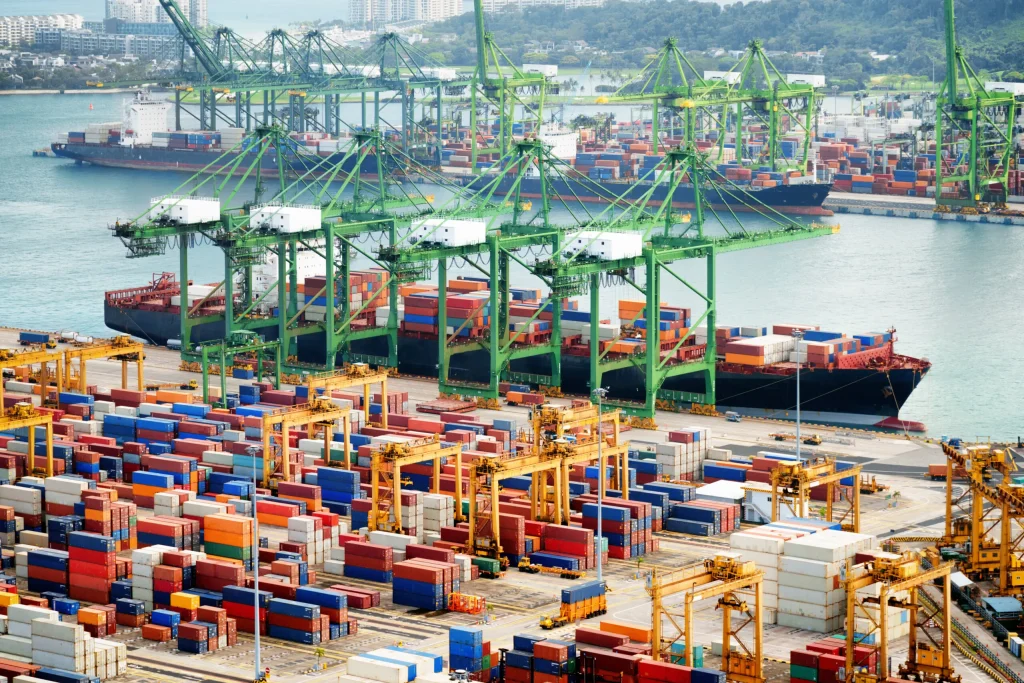
The proposal? A federal tax credit to encourage the domestic manufacturing of port cranes—equipment that nearly every American container terminal relies on, but which almost none are built in the U.S.
Most of the cranes towering over U.S. ports today are made abroad, particularly in China. And for some officials, that’s no longer acceptable.
“We can’t keep expanding port capacity without addressing the risk of foreign dependency,” said Senator Paul Emerson (I–OR), one of the bill’s sponsors. “What happens if a major supplier cuts us off or delays a part shipment for months?”
The bill offers financial incentives for companies willing to restart crane production on U.S. soil—something that hasn’t been done at scale for decades.
Terminal managers from Charleston to Long Beach have expressed quiet support. Not because of patriotism, they say, but because delays in maintenance or upgrades are becoming more frequent.
“We wait weeks for diagnostics, then longer for parts. Sometimes, a two-hour fix takes two months,” said one operations director on the East Coast, who preferred not to be named.
Still, skeptics point out that building ship-to-shore cranes is no small feat. It requires specialized steel, large fabrication yards, and engineering experience that is hard to reassemble overnight.
Yet the mood is shifting. As supply chain resilience moves higher on the political agenda, lawmakers seem more willing to support industrial policies that were once considered out of fashion.
Whether the bill will pass remains to be seen. But the conversation it’s sparked—about ownership, capacity, and control—may already be reshaping how America thinks about its ports.
The post U.S. Ports Seek Independence as Lawmakers Push for American-Made Cranes appeared first on The Logistic News.
Share this post

Related
Posts
The United States seizes a 7th tanker: pressure mounts on sanctioned ships
New episode in the maritime tug-of-war over sanctions: the United States has seized a seventh tanker suspected of operating in...
China replaces US barrels with Canada: new impact on tanker routes
The geography of oil is shifting, and shipping feels it immediately. According to analyzes reported by BIMCO, Chinese crude oil...
The Port of Klaipėda Signs a Record Year Driven by Containers, LNG, and Ro-Ro
The Lithuanian port of Klaipėda announces a historic performance in 2025: 39 million tons handled, despite a tense geopolitical context...
Ocean Alliance maintains the detour via the Cape, while preparing a “Suez plan”
The Ocean Alliance (CMA CGM, COSCO Shipping, Evergreen, and OOCL) has just unveiled its “Day 10” East-West network, which will...