


European Retailers Shift to Rail Freight as Ocean Delays Disrupt Asia Routes
By Maria Kalamatas | July 24, 2025
Section: International / Rail Freight & Trade Connectivity
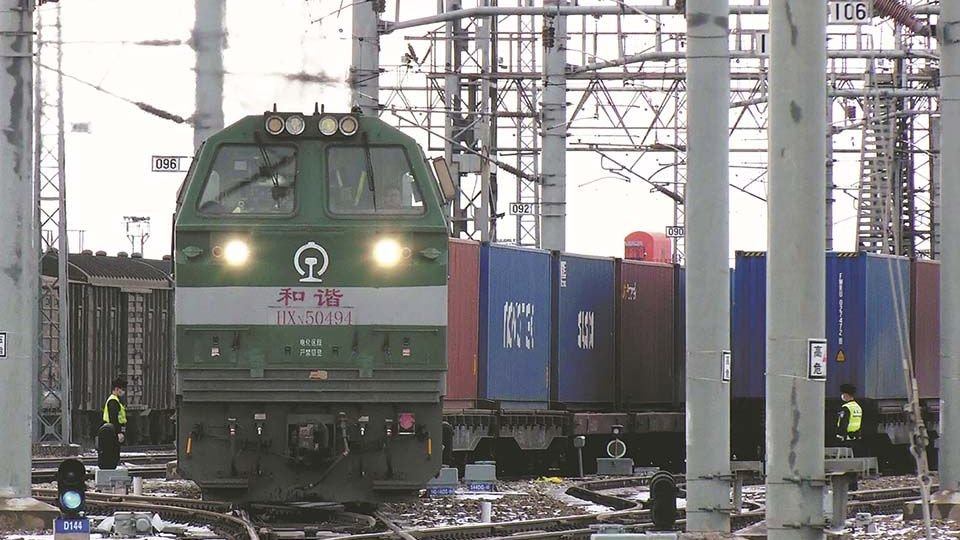
Hamburg, July 24 — Retailers across Europe are increasingly moving high-value goods from China via rail as ocean shipping delays and port congestion continue to disrupt Asia-Europe supply chains, making the Eurasian rail corridor a vital alternative.
“Bookings on rail have nearly doubled this month,” said Anja Keller, logistics director for a German retail group. “Sea freight remains cheaper, but predictable delivery has become more important than saving on rates.”
Speed and reliability over cost
Rail transit between China and Europe averages 18 to 20 days — nearly half the time of current ocean routes, where vessel backlogs and long dwell times in Asia have stretched schedules.
“For seasonal goods and electronics, we can’t afford missed delivery windows,” Keller explained. “Rail gets products on shelves when they’re needed.”
Infrastructure under pressure
Hubs in Poland and Germany are running near full capacity, prompting operators to add departures and extend terminal hours. Some forwarders are combining rail with short-sea routes to reach southern Europe more efficiently.
“We’re scaling carefully to avoid bottlenecks on our end,” said Marek Kowalski, operations chief at a Polish intermodal hub. “The shift to rail is accelerating faster than anyone expected.”
Rates rise with demand
Spot prices for rail services have climbed 10 to 15 percent in the past month. Retailers, however, see the premium as a hedge against the risk of empty shelves during critical sales periods.
The post European Retailers Shift to Rail Freight as Ocean Delays Disrupt Asia Routes appeared first on The Logistic News.
Share this post

Related
Posts

U.S. court rejects NLRB’s Cemex unionization rule
A U.S. federal appeals court has rejected a controversial labor policy known as the Cemex standard, dealing a significant setback...
FMC monitoring war impact on ocean freight rates
The U.S. Federal Maritime Commission (FMC) has confirmed it is closely monitoring the impact of the Iran conflict on ocean...

Ethiopian Cargo joins Freightos digital booking platform
Ethiopian Cargo & Logistics Services is preparing to join the WebCargo by Freightos digital booking platform at the end of...

EFW signs A330 freighter conversion deal with APAL
Elbe Flugzeugwerke has signed a deal with Hong Kong-based lessor Asia Pacific Aviation Leasing Group for the conversion of an...