


Packaging Revolution: How Circular Logistics Is Reshaping Global Warehousing
By Maria Kalamatas | May 7, 2025
Toronto, CANADA —
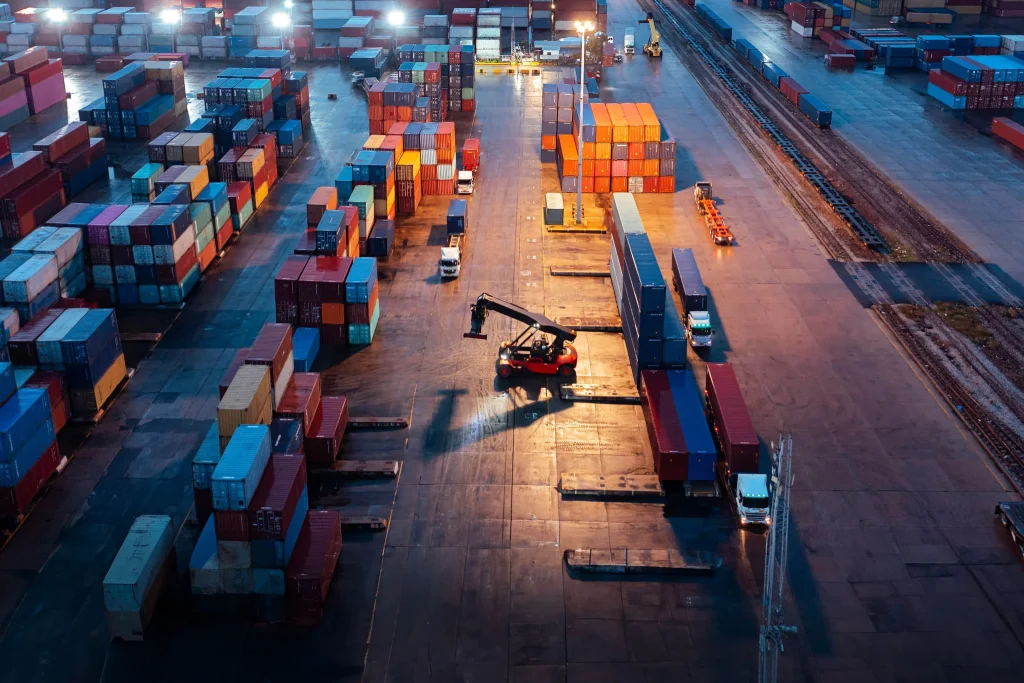
As sustainability takes center stage in logistics, the traditional warehouse is getting a complete redesign. From returnable pallets to traceable smart crates, 2025 is seeing the rise of circular logistics as more than just an environmental option—it’s now a competitive necessity.
“We’ve spent years reducing transit time and cost-per-kilo,” said Carla Moreno, Director of Operations at LoopCargo North America. “But now? We’re reducing what gets thrown away—and turning that into business value.”
⸻
Reuse as a business strategy
The concept of reusable packaging isn’t new. What is new, however, is how quickly it’s scaling. Once limited to high-tech supply chains or niche FMCG products, reusable containers and returnable packaging units (RPUs) are now being deployed by major multinationals.
In Q1 2025 alone, global adoption of circular packaging rose by 34%, according to a report by the Circular Logistics Alliance. The shift is being driven by stricter sustainability regulations—but also by the math.
“Just by switching to reinforced RPUs, we reduced damaged shipments by 22%,” Moreno noted. “It’s not just about the planet. It’s about efficiency.”
⸻
Digital tools, circular thinking
In the past, reusable packaging often disappeared after a few shipments. Now, tech is closing the loop. RFID chips, QR codes, and embedded sensors allow logistics teams to track each crate in real time—where it is, how often it’s used, when it needs repair.
“You can’t manage what you can’t see,” said Dr. Markus Lange, Innovation Lead at WareTrack Systems. “The moment you add traceability, everything changes—your inventory, your returns, even how you plan routes.”
This data isn’t just helpful—it’s essential for scaling reuse without losing visibility or accountability.
⸻
Warehouses get a green reset
Circular logistics isn’t only about packaging. Warehouses themselves are being reimagined—from the materials they’re built with to how they’re powered and configured.
At Germany’s GreenHub Logistics Park, the latest warehouse opened this year with net-zero emissions, solar-powered loading docks, and racking systems built from recycled steel. It even includes rainwater harvesting and zero-waste processing zones.
“This isn’t a showcase for investors,” Lange said. “It’s a full-scale shift in how we operate.”
⸻
The end of waste is the start of growth
What used to be “waste” is now being treated as cost. And in a year where margins are under pressure across global supply chains, every item reused is one less item lost—and one more reason clients stick around.
“We no longer see sustainability as a marketing slogan,” Moreno concluded. “It’s a logistics strategy. In 2025, waste is inefficiency. And we can’t afford inefficiency.”
The post Packaging Revolution: How Circular Logistics Is Reshaping Global Warehousing appeared first on The Logistic News.
Share this post

Related
Posts
Maersk forced to reposition fuel supplies as Middle East bunkering collapses
The disruption to oil exports through the Strait of Hormuz is forcing Maersk to take the unusual step of transporting...

Multipurpose vessel sector stable for now despite Middle East conflict
The ongoing conflict in the Middle East has so far had only limited direct impact on the multipurpose vessel (MPV)...

US trucking rates rise as diesel prices surge amid Middle East tensions
The US trucking market is showing early signs of emerging from a freight downturn that has lasted nearly four years....

FMC monitoring carrier surcharges linked to Middle East conflict
The US Federal Maritime Commission (FMC) has announced it is closely monitoring new surcharges introduced by ocean carriers as the...