


Strategic Skybridge: Saudia Cargo and China Cargo Airlines Unite to Power Middle East–Asia Trade
By Eva Richardson – The Logistic News
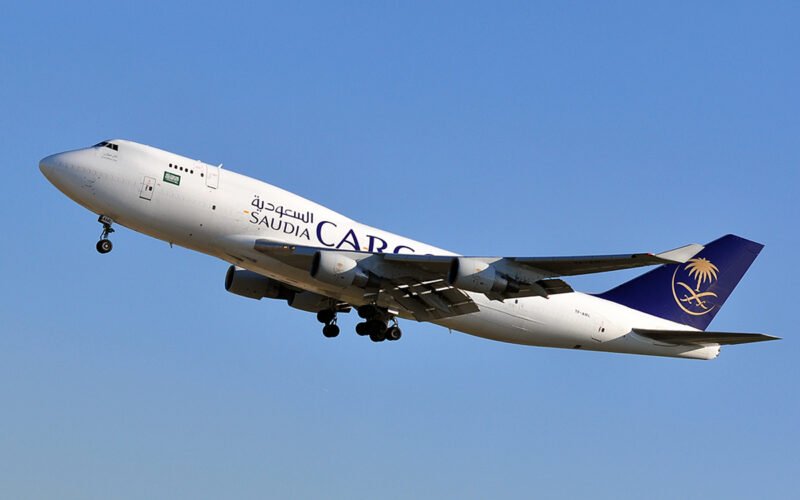
In a move that could redefine regional air freight dynamics, Saudia Cargo and China Cargo Airlines have entered a strategic alliance to strengthen trade lanes between the Middle East and Asia, two of the fastest-growing logistics corridors in the world.
The agreement, finalized on April 23, will see both carriers coordinate capacity, optimize schedules, and develop joint handling and transit services at major cargo hubs including Riyadh, Jeddah, Shanghai Pudong, and Hong Kong.
This partnership is more than a code-share—it is a deliberate response to rising cross-border e-commerce, industrial rebalancing, and the surge in demand for high-value and time-sensitive shipments between the Gulf and East Asia.
Beyond Airspace: A Supply Chain Alignment
What sets this alliance apart is its end-to-end scope. In addition to synchronized flights, the agreement includes shared digital booking platforms, co-developed cargo tracking systems, and joint investments in cold-chain infrastructure, particularly for pharmaceutical and fresh goods.
“This is not just about cargo lanes—it’s about cargo ecosystems,” said Mohammed Al-Maghlouth, CEO of Saudia Cargo. “Our shared vision is to create a seamless freight experience between China and the Middle East, one that matches the speed and reliability today’s trade requires.”
Meeting the Demands of a New Trade Era
The timing of the deal is strategic. As China shifts parts of its manufacturing base to Southeast Asia and as Saudi Arabia accelerates its Vision 2030 logistics ambitions, air freight connectivity has become a geopolitical asset as much as an economic one.
According to industry analysts, Middle East–Asia air cargo volumes rose by 19% in 2024, fueled by demand for electronics, automotive parts, and rapid parcel delivery for cross-border platforms.
“China is now the Gulf’s largest non-oil trade partner. And air cargo is the fastest channel to serve that relationship,” noted Wang Jinhai, Vice President of China Cargo Airlines.
Freight Forwarders Welcome Stability
For freight forwarders long accustomed to fragmented booking and inconsistent transit reliability between Asia and the GCC, the news has been met with cautious optimism.
The alliance promises more predictable schedules, streamlined customs pre-clearance, and potentially lower fuel-adjusted surcharges due to more efficient load balancing across joint flights.
A Model for Regional Freight Integration?
As global logistics continues to regionalize in the face of geopolitical volatility, many see this partnership as a blueprint for future air cargo cooperation—particularly between carriers that have deep local expertise but complementary global ambitions.
“It’s not about replacing global integrators,” said Al-Maghlouth. “It’s about building focused, resilient corridors that serve tomorrow’s supply chains.”
The post Strategic Skybridge: Saudia Cargo and China Cargo Airlines Unite to Power Middle East–Asia Trade appeared first on The Logistic News.
Share this post

Related
Posts

Maersk forced to reposition fuel supplies as Middle East bunkering collapses
The disruption to oil exports through the Strait of Hormuz is forcing Maersk to take the unusual step of transporting...

Multipurpose vessel sector stable for now despite Middle East conflict
The ongoing conflict in the Middle East has so far had only limited direct impact on the multipurpose vessel (MPV)...

US trucking rates rise as diesel prices surge amid Middle East tensions
The US trucking market is showing early signs of emerging from a freight downturn that has lasted nearly four years....

FMC monitoring carrier surcharges linked to Middle East conflict
The US Federal Maritime Commission (FMC) has announced it is closely monitoring new surcharges introduced by ocean carriers as the...