


U.S. Ends Duty-Free Entry for Chinese Parcels: A Tactical Shift in Trade Enforcement
By Eva Richardson, The Logistic News
The United States will, starting May 2, 2025, require all low-value parcels from China and Hong Kong to go through full customs clearance — ending their long-standing exemption from import duties under the de minimis rule.
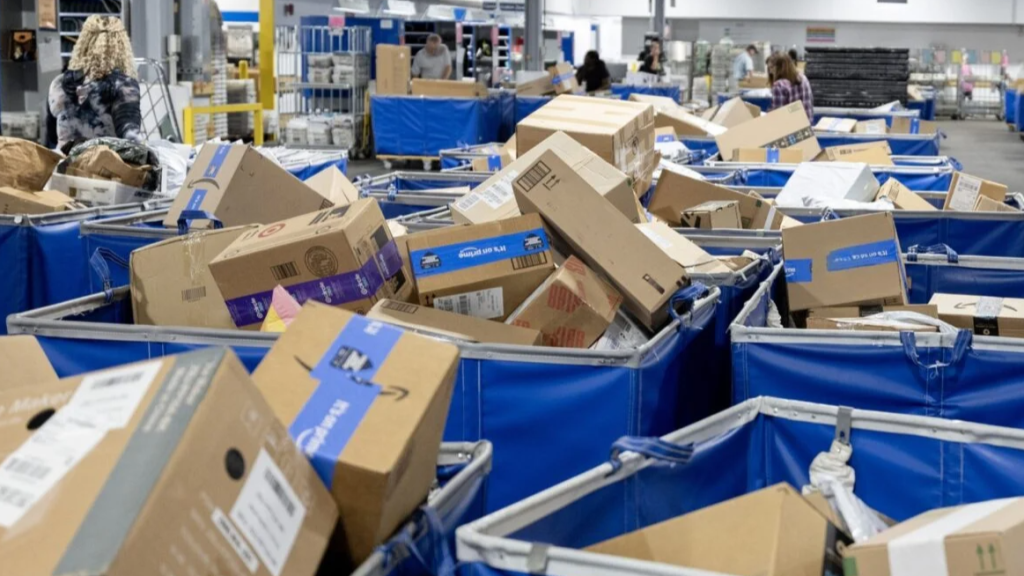
The rule, which allowed shipments valued under $800 to enter the country duty-free, was designed for small, occasional imports. Instead, it became the backbone of China-based e-commerce logistics, powering the rise of platforms like Shein, Temu, and AliExpress.
Those parcels will now face standard processing, classification, and taxation, regardless of value.
“This isn’t about punishing imports,” said a U.S. Customs official. “It’s about closing a gap that’s no longer defensible.”
A Direct Hit to Volume-Based Platforms
For companies built on speed and scale, the shift is dramatic.
Fast-fashion and consumer goods sellers in China rely on micro-shipments to avoid duties, sending millions of individual packages per week. That system now faces cost friction, slower clearance, and higher exposure to enforcement.
A $5 accessory or a $3 phone cable will now need a full declaration — with all the administrative weight that implies.
“It breaks the business model, not just the delivery schedule,” said a Hong Kong logistics advisor.
U.S. Retailers: ‘Finally.’
For American retailers, the decision is long overdue.
Many have argued that de minimis gave foreign sellers an unfair price advantage.
While they followed domestic rules, overseas competitors avoided duties and safety checks — simply by shipping orders one by one.
“This isn’t protectionism. It’s the bare minimum of fairness,” said a representative of a U.S. retail coalition.
Logistics Systems Under Pressure
With the exemption gone, millions of parcels will now require formal entry.
Freight operators, brokers, and express carriers must scale up quickly — or risk massive bottlenecks.
Many are turning to automated clearance tools. Others warn of short-term chaos.
And some exporters may try to bypass the rule entirely — by rerouting shipments through third countries, masking their true origin.
One Policy, Many Signals
This is not just a customs update.
It’s a message: trade rules can and will be rewritten, based on both economic impact and political context.
By excluding China and Hong Kong — but not other countries — the U.S. is testing a new kind of targeted trade enforcement.
Other governments are watching.
And for global e-commerce, May 2 may be remembered as the day “low-value” stopped meaning “low-impact.”
The post U.S. Ends Duty-Free Entry for Chinese Parcels: A Tactical Shift in Trade Enforcement appeared first on The Logistic News.
Share this post

Related
Posts
Maersk forced to reposition fuel supplies as Middle East bunkering collapses
The disruption to oil exports through the Strait of Hormuz is forcing Maersk to take the unusual step of transporting...

Multipurpose vessel sector stable for now despite Middle East conflict
The ongoing conflict in the Middle East has so far had only limited direct impact on the multipurpose vessel (MPV)...

US trucking rates rise as diesel prices surge amid Middle East tensions
The US trucking market is showing early signs of emerging from a freight downturn that has lasted nearly four years....

FMC monitoring carrier surcharges linked to Middle East conflict
The US Federal Maritime Commission (FMC) has announced it is closely monitoring new surcharges introduced by ocean carriers as the...